Get Paid to Train AI: Remote AI Freelancing Guide
AI companies pay experts to review and improve AI outputs. See the remote work, the platforms, how to build your resume and what to expect.
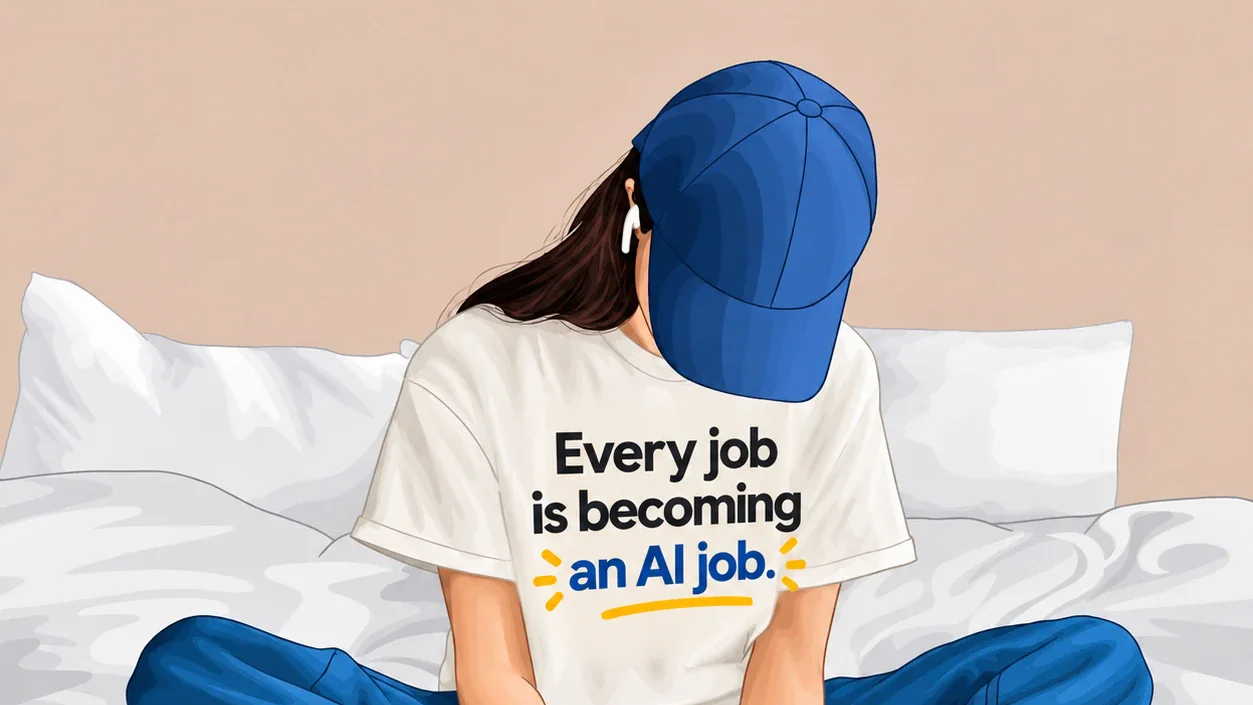
AI companies need more than engineers who build AI models. They also need people who can judge whether the work those models produce is actually correct. That has created a new kind of remote freelance work, where developers, designers, finance professionals, lawyers, healthcare professionals, marketers, writers and other subject-matter experts use the skills they already have to help evaluate and improve AI systems.
You don’t necessarily need to be an AI or machine-learning expert. Your existing professional expertise can be the skill these projects are looking for.
| The work | Review, rate and improve AI outputs in your field |
|---|---|
| Who it is for | Developers, designers, finance, legal, health, writers |
| You need | Real expertise, not an AI degree |
| Where to start | Mercor, Outlier, Mindrift |
What the Job Actually Is
Imagine an AI model generates an answer. Someone still has to decide whether it is any good. That someone is you. The questions you would be answering look like this:
- Is this answer correct?
- Is anything in it factually wrong?
- Did the AI follow the instructions it was given?
- Which of two answers is better?
- How could the response be improved?
- What would an expert-quality answer look like?
That is where human contributors come in.
The idea in one line: AI systems still need knowledgeable humans who can judge whether their outputs are actually good. Your professional judgment is the product.
The Seven Kinds of Work
Depending on the project, your work could include any of these.
| Task | What you do |
|---|---|
| Reviewing AI outputs | Check whether an AI-generated response is accurate, relevant and complete. |
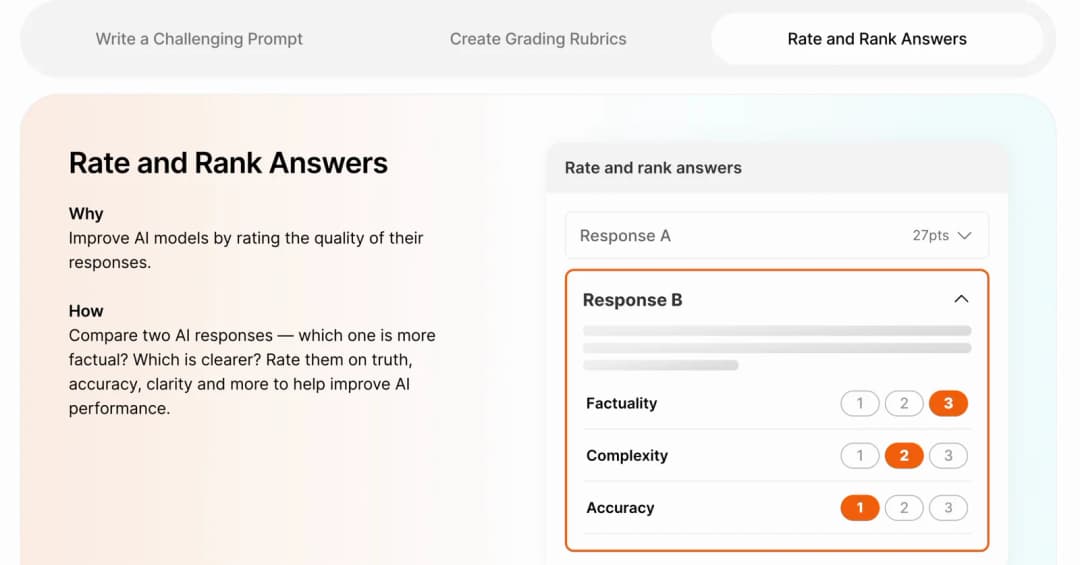
| Rating and comparing responses | Compare two or more AI answers and decide which better satisfies the requirements. |
| Finding mistakes | Identify factual, logical, technical or domain-specific errors. |
| Improving responses | Edit an AI-generated response, or explain how it could be improved. |
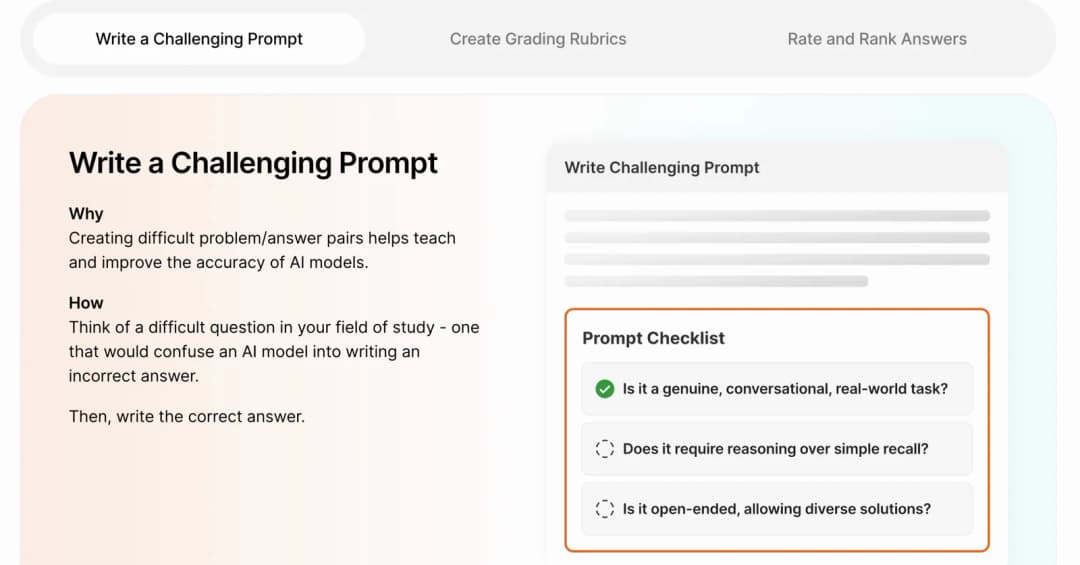
| Creating prompts and problems | Write realistic questions or difficult problems that test what an AI model can do. |
| Creating ideal answers | Show the model what a high-quality expert response looks like. |
| Annotating data | Label, categorise, tag or otherwise evaluate the information used in AI development. |
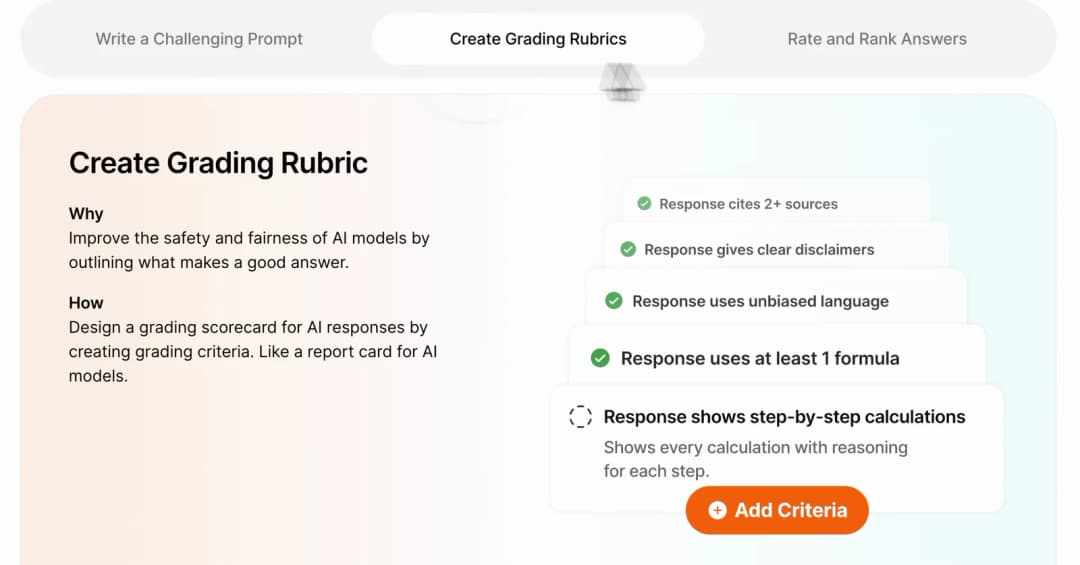
Here is what three of those tasks look like on Outlier: writing a challenging prompt, creating a grading rubric, and rating and ranking two AI answers.
What It Looks Like for Your Profession
The same work looks different in every field. Find yours below, and notice what each one asks you to put on your resume.
Software developer
A model generates code for a programming problem. You may be asked to review that code, find bugs, check whether the solution actually works, evaluate its quality, compare two solutions and explain why one approach is better. Some projects ask you to create difficult coding problems or write an ideal solution.
Put on your resume: programming languages, frameworks, debugging, code reviews, system design, APIs, testing, databases, GitHub and real applications you have built.
Example skills: Python • JavaScript • React • Node.js • SQL • APIs • Debugging • Code Review • System Design • Testing
Product / UI/UX designer
You could evaluate AI-generated creative or product-design work. Tasks may involve reviewing outputs for usability, visual hierarchy, accessibility, consistency, or whether the result follows the original brief.
Put on your resume: UX/UI design, Figma, design systems, user research, prototyping, usability testing, accessibility and shipped products. Include your portfolio link wherever possible.
Marketing professional
AI models increasingly generate advertisements, marketing strategies, emails, landing-page copy and social-media content. A marketing expert may evaluate whether those outputs make sense.
Put on your resume: content strategy, copywriting, SEO, paid advertising, campaign strategy, analytics, market research, positioning, A/B testing and measurable campaign results.
Finance professional
A finance expert could receive an AI-generated financial analysis or scenario and evaluate whether its calculations, assumptions and reasoning make sense. Some projects also involve creating realistic financial problems for AI systems to solve.
Put on your resume: financial modelling, valuation, investment research, financial statements, Excel, forecasting, risk analysis and relevant professional credentials.
Accountant
An accountant may evaluate AI-generated accounting calculations, explanations or financial information.
Put on your resume: accounting standards, auditing, taxation, reconciliation, financial reporting, Excel and relevant qualifications such as CA or CPA where applicable.
Lawyer / legal professional
AI can generate legal research, contract analysis and other forms of legal reasoning. Legal experts can help determine whether those outputs are accurate and appropriately reasoned.
Put on your resume: your practice area, legal research, contract review, drafting, case analysis, regulatory knowledge and relevant professional qualifications.
Doctor / healthcare professional
Healthcare-related AI requires people who understand clinical terminology and reasoning. Depending on the project, healthcare professionals may evaluate the accuracy and quality of medical-domain AI outputs.
Put on your resume: medical education, specialty, clinical experience, licences or certifications, research, publications and relevant professional experience.
STEM / research professional
People with backgrounds in mathematics, physics, biology, chemistry, engineering and other technical fields may work on complex reasoning tasks. You might create difficult questions, solve problems, review AI solutions or explain where an AI’s reasoning went wrong.
Put on your resume: your degree, specialisation, research experience, publications, quantitative skills, technical tools and teaching or research experience.
Consultant / business professional
AI models can also be evaluated on realistic business problems. Tasks can involve strategy, operations, quantitative analysis, research or other professional scenarios.
Put on your resume: strategy, business analysis, operations, research, presentations, financial analysis, problem solving and measurable client or project outcomes.
Writer / language expert
Some projects need excellent writing and language skills rather than technical expertise. Tasks can include evaluating clarity, grammar, factual consistency, tone and instruction-following.
Put on your resume: writing, editing, proofreading, research, localisation, language proficiency and published work.
Platforms Where You Can Find This Work
Three places to start. Each one matches experts to projects; the details differ, so read what each is currently offering before you apply.
1. Mercor
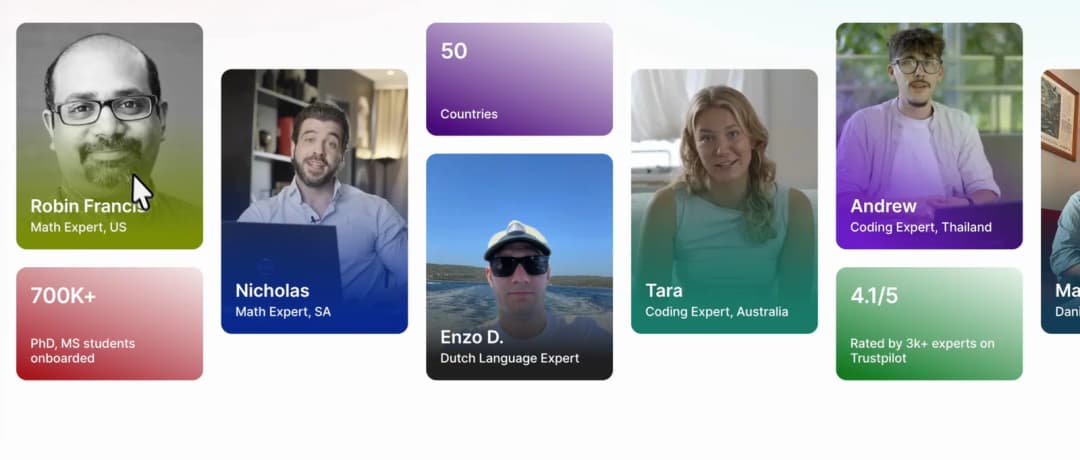
Mercor connects professionals with remote AI projects based on their expertise. Current opportunities span software engineering, finance, healthcare, legal, accounting, consulting, business operations, creative work, and STEM and other specialist domains. The typical process is to create your professional profile, complete assessments and be matched with opportunities relevant to your expertise.
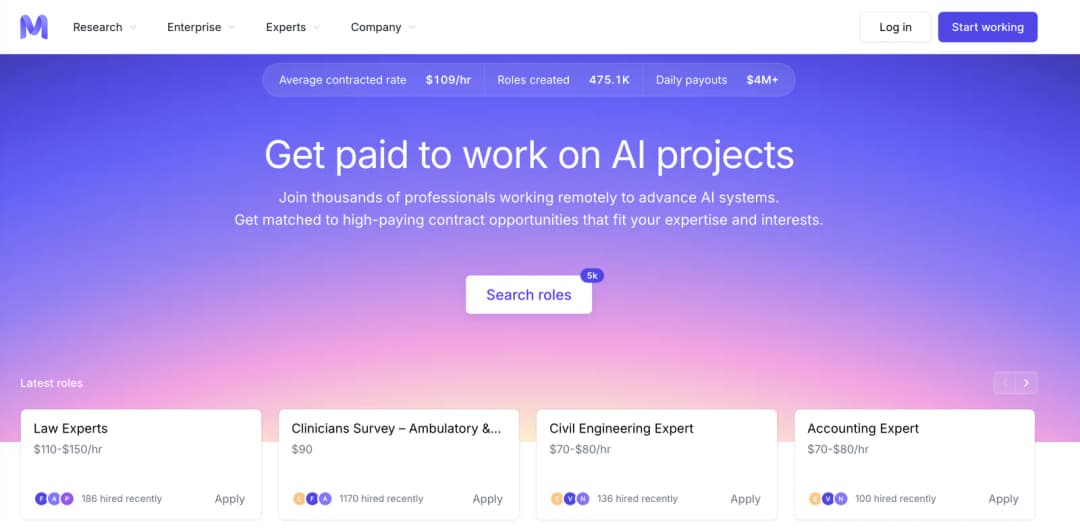
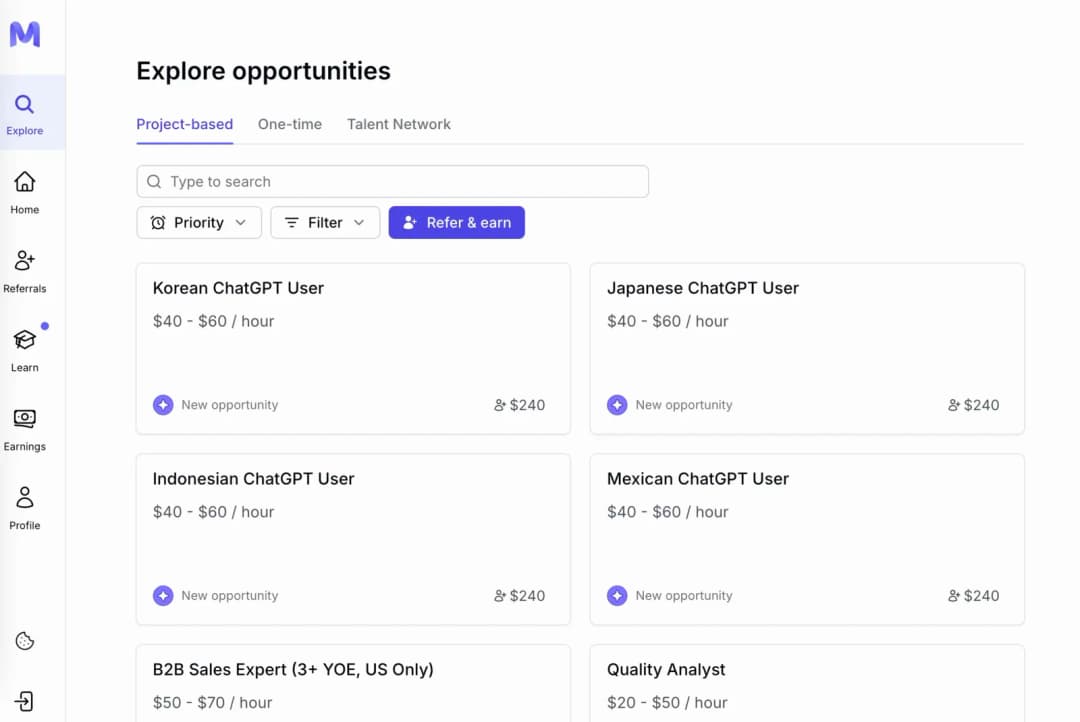
Once you are in, the Explore tab lists open projects with their pay, and you apply to the ones that match your field.
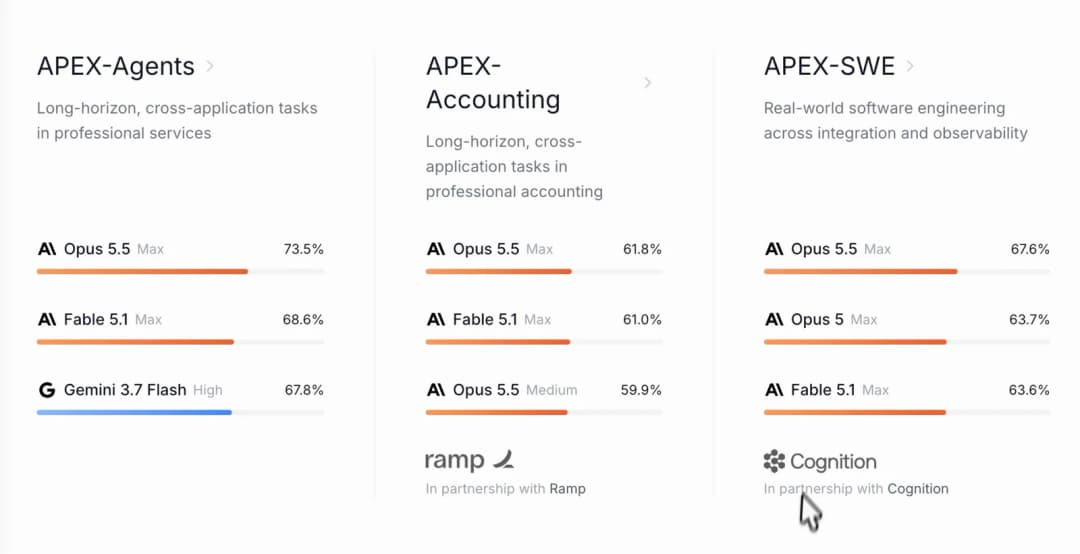
Expert work like this also feeds the benchmarks AI labs use to measure their models on real professional tasks.
Explore Mercor opportunities →
2. Outlier
Outlier offers remote projects where contributors use their expertise to help train and evaluate AI systems. Projects can involve coding, mathematics, finance, writing and other specialised subjects. Depending on the role, you might create problems, evaluate AI-generated responses, identify errors or provide expert feedback.
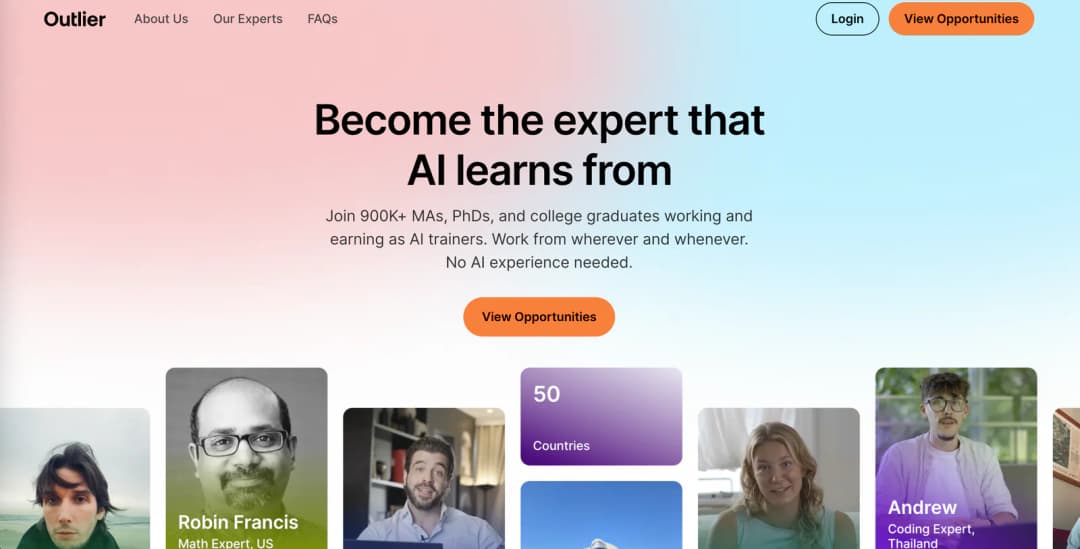
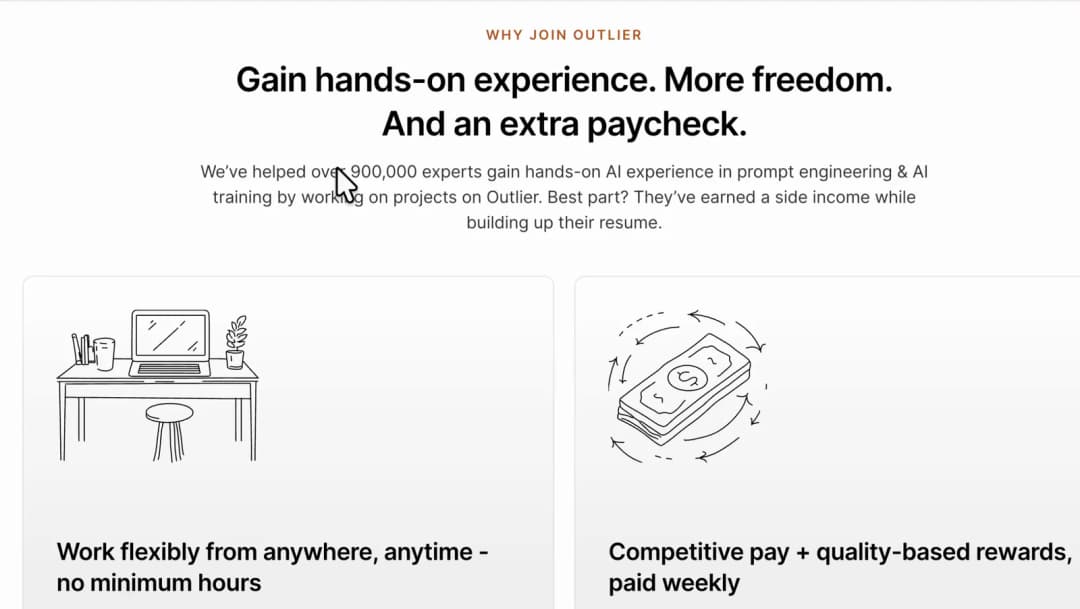
Outlier says the work is flexible, with no minimum hours, and paid weekly.
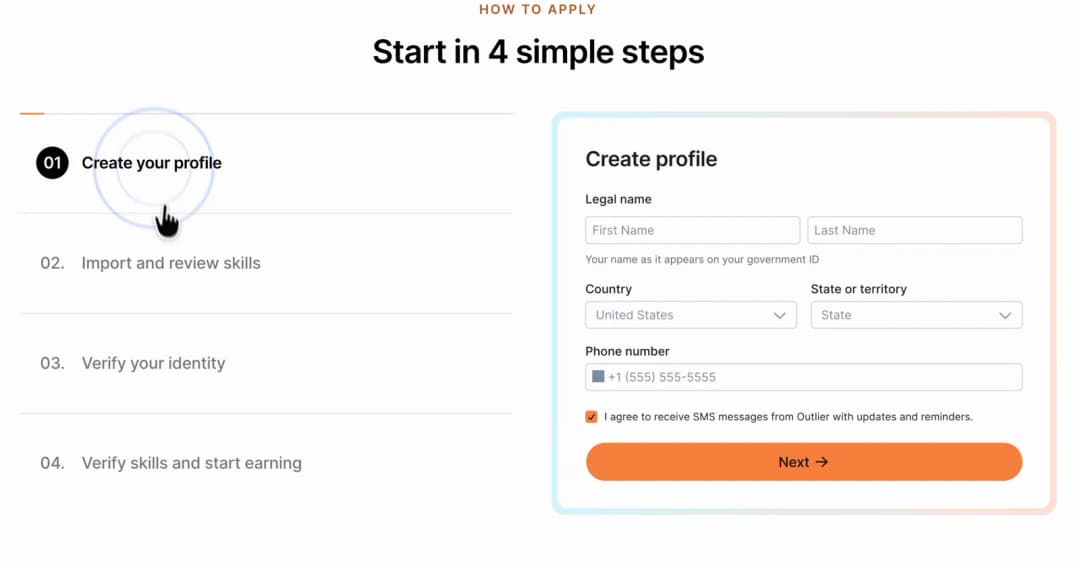
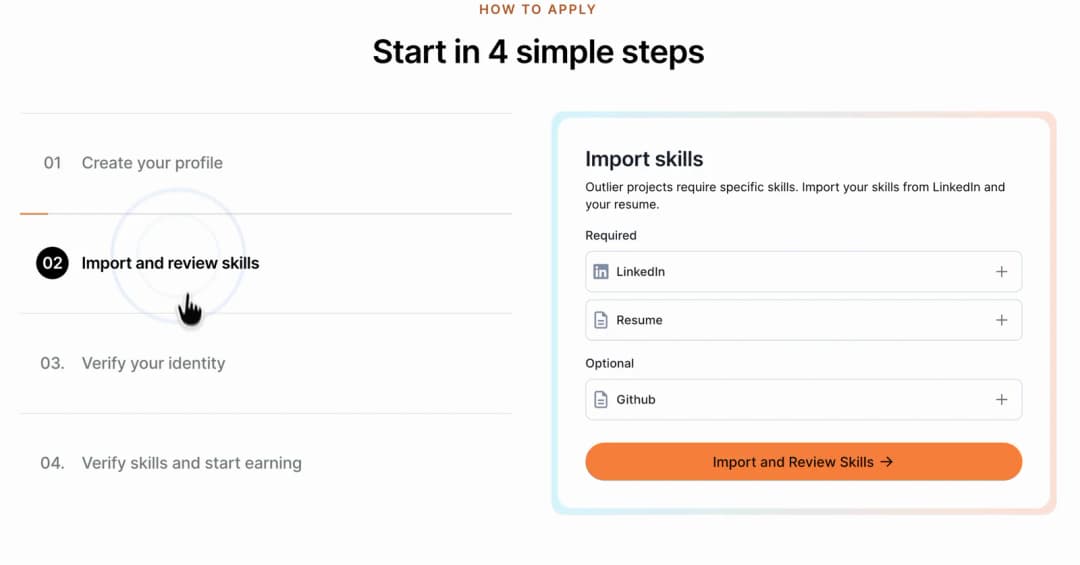
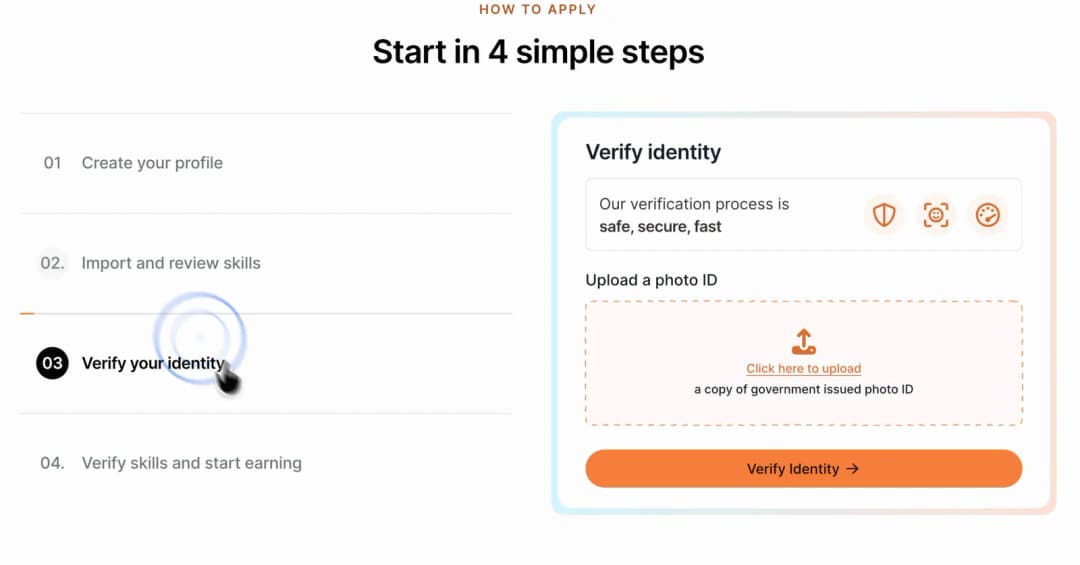
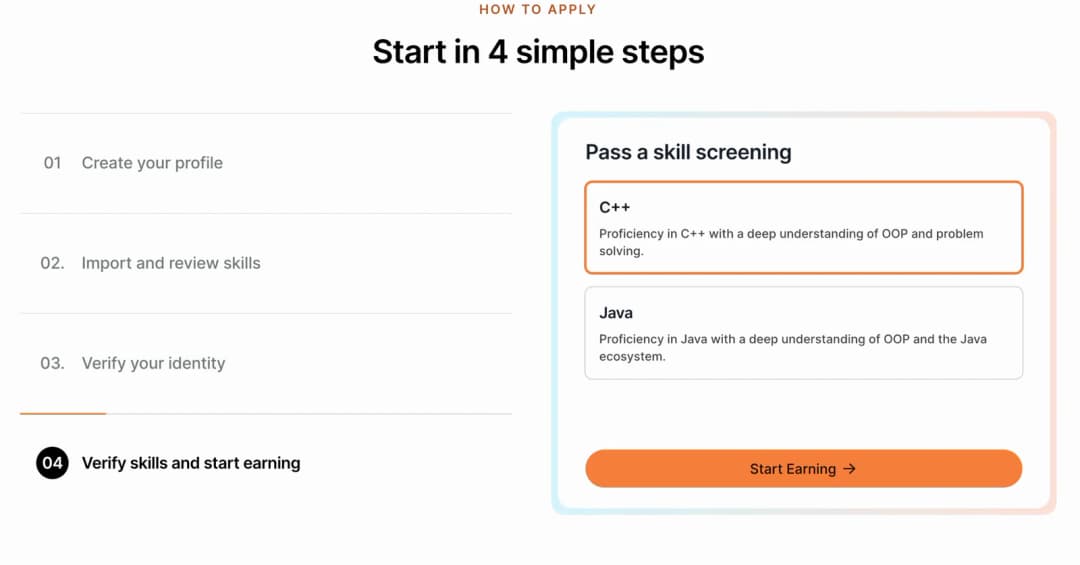
Applying takes four steps: create your profile, import and review your skills, verify your identity, then pass a skill screening.
Explore Outlier opportunities →
3. Mindrift
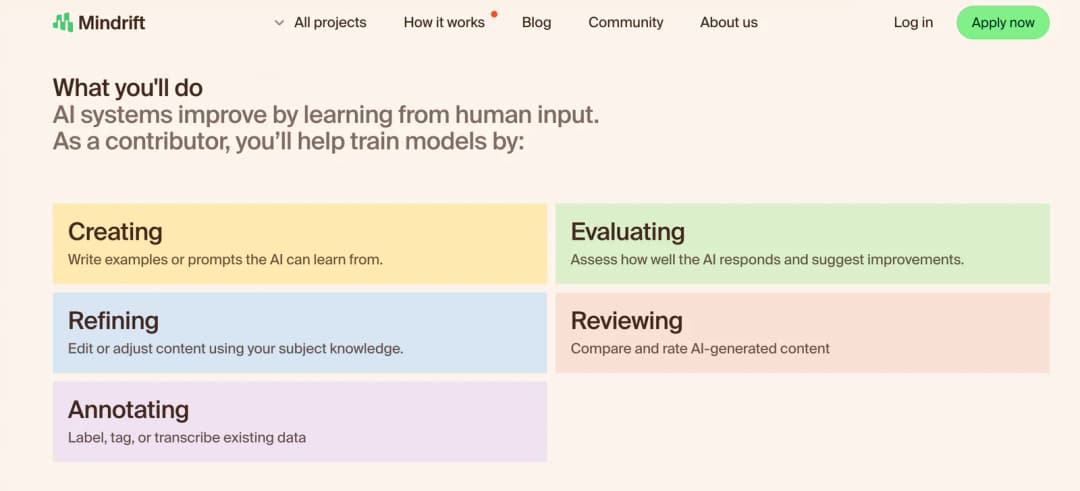
Mindrift offers both general and specialised AI-training projects. The work can include creating prompts and examples, evaluating AI responses, refining AI-generated content, comparing and rating outputs, and annotating or labelling data. Specialised projects require expertise relevant to that particular domain.
Explore Mindrift opportunities →
How to Create Your Resume
One of the biggest mistakes you can make is a resume filled with labels like AI Expert, Prompt Engineer or AI Enthusiast when you have no professional experience in those areas. Instead, show the real expertise that qualifies you to judge AI-generated work. Your objective is to make your professional expertise immediately understandable.
| Profession | Instead of this | Write your real specialisation |
|---|---|---|
| Software developer | AI enthusiast interested in training AI models | Software Engineer | Python, React & Node.js | Code Review, Debugging & System Design |
| Finance professional | AI enthusiast | Financial Analyst | Financial Modeling, Valuation & Investment Research |
| Product designer | AI enthusiast | Product Designer | UX/UI, Design Systems & User Research |
1. A professional headline
Write your actual specialisation. For example: Software Engineer | React, Node.js & Python | Code Review & System Design.
2. A professional summary
Use this structure, and only include statements that accurately describe your experience.
Fill in the brackets with your real details.
[Profession] with [X years] of experience in [specialization]. Experienced in [core skills]. Strong background in analyzing, reviewing and improving [domain-specific work], identifying errors and communicating clear, evidence-based feedback.
3. Skills
Add skills directly relevant to your profession. A developer could include Python • JavaScript • React • Node.js • SQL • Debugging • Code Review • APIs • System Design • Testing. A finance professional could include Financial Modeling • Valuation • Excel • Financial Statement Analysis • Investment Research • Forecasting • Risk Analysis.
4. Professional experience
Don’t simply describe what you were responsible for. Show your judgment, analysis and outcomes.
| Instead of | Write |
|---|---|
| Developed frontend features using React. | Developed and reviewed production React applications, debugging complex issues and conducting code reviews to improve reliability and code quality. |
| Managed digital marketing campaigns. | Developed and evaluated multi-channel marketing campaigns, using performance analysis and experimentation to improve conversion. |
Keep it completely truthful. Don’t add AI-training experience you don’t have. The whole point of this resume is that your real expertise is what qualifies you.
5. Show proof of your expertise
Where applicable, add evidence of your work.
| If you are a | Show |
|---|---|
| Developer | GitHub and deployed projects |
| Designer | A portfolio |
| Writer | Published articles and work |
| Researcher | Publications |
| Marketing professional | Campaign results and case studies |
| Doctor | Qualifications and licences |
| Lawyer | Qualifications and specialisation |
| Finance professional | Relevant qualifications and experience |
What the Assessment Could Look Like
After applying, you may have to complete an assessment related to your profession. Here is what that could involve.
| Profession | What the AI produces | What you may have to do |
|---|---|---|
| Developer | Two solutions to a coding problem | Identify which is correct, find bugs and explain why one is better. |
| Finance professional | A financial analysis | Check its calculations, assumptions and reasoning. |
| Designer | A design-related solution | Evaluate whether it follows the brief, identify usability and design problems, and explain how it could be improved. |
| Legal professional | Legal reasoning | Evaluate its accuracy, reasoning or supporting information. |
The assessment is often testing the same thing that makes you valuable to the project: your professional judgment.
How Much You Can Earn
There isn’t one standard rate for AI-training work. Compensation varies a lot with:
- Your domain
- Your level of expertise
- Project complexity
- Location requirements
- Demand for your specialisation
- Project duration
- The hours you have available
General evaluation and annotation work can pay significantly less than highly specialised professional work. For example, Mercor listings at the time of writing included some specialist opportunities at around $60–$80 an hour, while certain legal, medical, software and cybersecurity opportunities advertised substantially higher rates. Other AI-training platforms and projects can pay considerably less.
Advertised rates are not guaranteed earnings. These are project-specific advertised rates. Your monthly income depends on the projects you are accepted for, the rate offered and how much work is actually available. A high hourly rate does not necessarily mean a project will give you full-time hours.
Before You Apply
Keep these five points in mind.
- You shouldn’t have to pay to get a job. Be cautious of anyone asking for money simply to access an opportunity.
- Read the individual job description. Requirements, location restrictions, compensation and project duration can vary significantly.
- Don’t fake expertise. These platforms can use assessments to test whether you actually understand the field on your resume.
- Don’t expect guaranteed work. Freelance project availability can change.
- Don’t treat advertised hourly rates as guaranteed monthly income.
The Simple Process
Identify your strongest professional or domain skill
Pick the field where your judgment is strongest. That is what you will be hired for.
Create or update your resume around that expertise
Use the headline, summary, skills and experience structure from the resume section above.
Add proof of your work
A portfolio, GitHub, projects, certifications, publications or measurable professional outcomes, where relevant.
Apply for opportunities that genuinely match your expertise
Read each job description first, including the requirements and location restrictions.
Complete the platform’s assessment or screening process
Expect it to test the same professional judgment your resume claims.
If selected, carefully read the project guidelines
Do this before completing any tasks.
You don’t necessarily need to become an AI engineer to work on AI. Your existing professional expertise is valuable because AI systems still need knowledgeable humans who can judge whether their outputs are actually good.
Frequently Asked Questions
Do I need to be an AI or machine-learning expert?
No. Your existing professional expertise can be the skill these projects are looking for. What matters is that you can judge whether the AI’s work in your field is correct.
Can I write “AI expert” on my resume?
Only if it is true. Labels like AI Expert, Prompt Engineer or AI Enthusiast, without professional experience behind them, are one of the biggest resume mistakes. Show your real specialisation instead, and don’t add AI-training experience you don’t have.
Is the hourly rate guaranteed?
No. Rates you see advertised are project-specific. Your income depends on the projects you are accepted for, the rate offered and how much work is actually available.
Should I ever pay to get this kind of work?
No. You shouldn’t have to pay to get a job, so be cautious of anyone asking for money simply to access an opportunity.
What is the assessment like?
It usually relates to your profession. A developer might compare two AI-written solutions and find the bugs; a finance professional might check an AI-generated analysis; a designer might judge whether a design follows its brief. It tests your professional judgment.
Is this full-time work?
Don’t assume so. These are freelance projects, and availability, duration and hours can change from one project to the next.
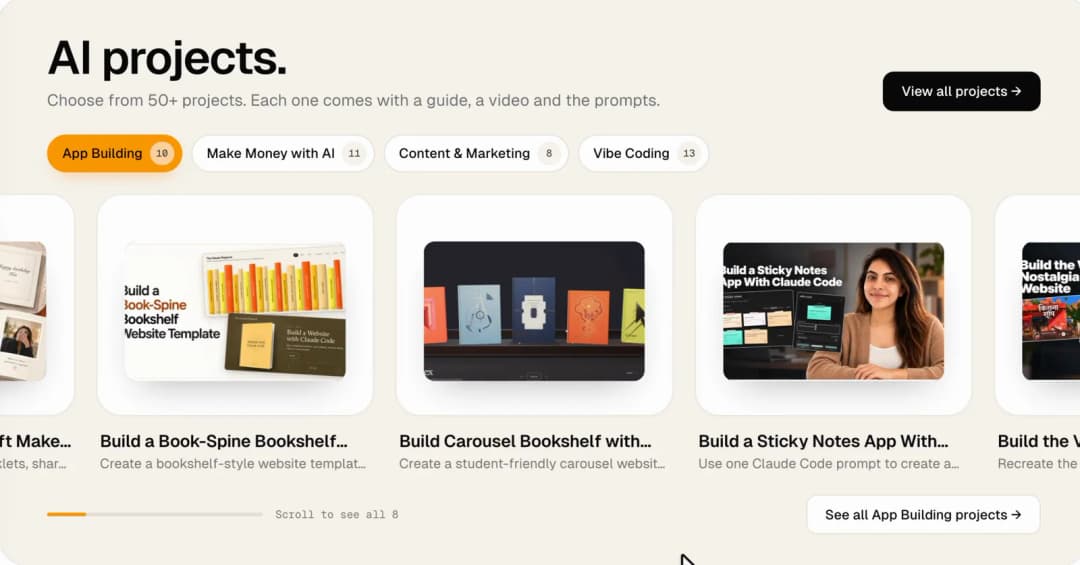
Want to build AI skills of your own while you apply? Every Above Yellow AI project comes with a guide, a video and the prompts.
Build 100 AI Projects With Me
This is one of the 100 AI projects I’m building to help you learn AI by making real things. Follow along for the next one.
Follow on Instagram →